
By Baden Holt, Dual AHPRA-registered practitioner (Acupuncture & Chinese Herbal Medicine)
3 years in practice, 6 years training in Chinese medicine clinics | Principal Practitioner, Geelong Chinese Medicine
Published: 3/9/2026 | Last updated: 3/9/2026
This article discusses a recent study on attention and immune function, alongside a related idea from Chinese medicine. It’s general health information based on published research and clinical experience, not a substitute for individual medical advice. Speak with a registered practitioner about your specific situation.
A study published in Nature Human Behaviour in August 2026 found that people who paid close attention to a skin reaction produced a smaller inflammatory response than people who were distracted by videos. The wheal was around 1.5 times smaller, the flare around 1.3 times smaller, and the pattern held for close to 90% of participants. It’s evidence that where you place your attention is part of how your body decides how hard to react.
What the researchers did
Nofar Mizrachi, Menachem Rottem and Liron Rozenkrantz ran three experiments using a histamine skin prick test, the same reaction test used to check for allergies. Fifty-seven healthy adults took part across the three studies. Each participant had the same histamine reaction induced on their skin, then either watched a video or directed their attention inward toward the sensation. Researchers measured the wheal and flare at six points over twenty minutes, along with heart rate, skin conductance and other markers of nervous system activity.
What they found
The reaction was consistently smaller under internal attention than under distraction. The difference showed up within three minutes and grew from there. Heart rate variability, a marker of parasympathetic activity, was higher when people attended to the sensation. Heart rate, skin conductance and reported anxiety stayed the same in both groups. Attention was regulating the reaction through a more specific mechanism than general relaxation.
Two routes, not one
In a third experiment, researchers numbed the skin with lidocaine before repeating the test. The attention effect got smaller but didn’t disappear, which points to two separate pathways working together. One depends on sensory signal reaching the brain. Attention changes how that signal gets processed and fed back into the reaction. The other runs through the parasympathetic nervous system directly, independent of what the skin can feel. Attention appears to regulate immune response through both a bottom-up and a top-down route.
Why this matters
Inflammation is usually described as automatic, something the immune system runs without input from the mind. This study suggests that description is incomplete. Voluntary attention, a cognitive act, measurably changed a physical immune response in real time. The authors note this supports why attention-based approaches such as mindfulness and pain reprocessing therapy have shown benefit for some inflammatory and pain conditions.
It’s worth being clear about the limits. This was a small, healthy population, a localised histamine reaction, and a short time window. The researchers didn’t measure inflammation at the cellular level, and they’re upfront that it’s not yet known how far these findings extend to chronic, infectious or autoimmune conditions. This is early evidence of a mechanism, not a treatment protocol.
Where this connects to Chinese medicine
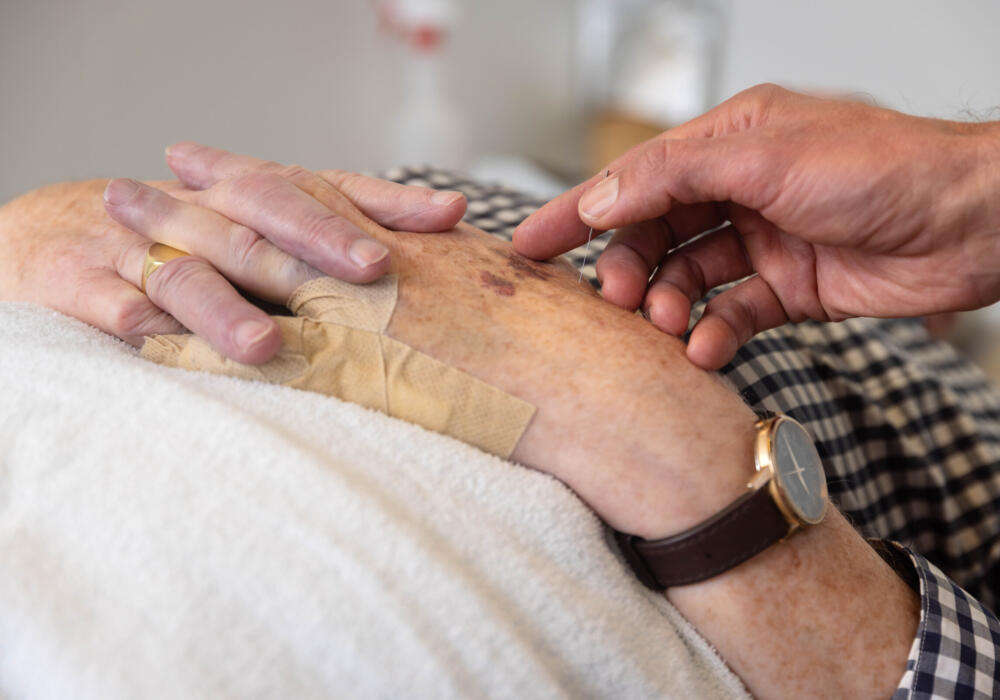
Chinese medicine has held a version of this idea for a long time. Yi dao qi dao, 意到气到, where the intention goes, the qi follows, is a working principle in acupuncture and qigong practice. The mind is not treated as separate from physiological function. Shen, the aspect of mind that includes attention and awareness, is understood to direct and regulate qi through the body.
This study doesn’t prove that framework correct. It’s a modern instrument picking up something the older framework assumed, long before it could be measured. That’s a useful kind of confirmation. It doesn’t validate every claim Chinese medicine makes, but it adds weight to one specific and testable part of it: directed attention has a real, physiological effect on how the body regulates a threat response.
What this means practically
The instinct to distract from an uncomfortable sensation, an itch, a mild reaction, a flare of pain, is understandable and often useful. This study is a reason to notice that instinct rather than follow it automatically. Bringing calm, curious attention to a sensation instead of pulling away from it may be doing more physiological work than it seems.
FAQ
Does this mean I should never distract myself from pain or discomfort?
No. Distraction has a real place, especially for acute or severe pain. This study looked at a mild, controlled reaction in a lab setting. It’s evidence for a mechanism, not a rule for every situation.
Is this the same as mindfulness meditation?
It’s related. The study used a simple attention task, not a meditation practice, but it supports a mechanism many mindfulness-based approaches rely on: that directing attention changes physiological response.
Does this apply to chronic conditions like autoimmune disease?
Not yet established. The study looked at a single, acute histamine reaction in healthy adults. The researchers are clear that it’s unknown how far this extends to chronic or autoimmune conditions.
Why would paying attention to a skin reaction affect the immune system?
The study found two pathways. One involves how attention changes the way sensory signals from the skin get processed. The other runs through the parasympathetic nervous system, independent of sensation.
Does this relate to acupuncture or herbal medicine?
This study didn’t test either directly. It connects to a broader principle in Chinese medicine, that directed attention and intention influence physiological function, one of the ideas acupuncture and qigong are built on.
References
Clinical research
— Mizrachi, N., Rottem, M., & Rozenkrantz, L. (2026). Voluntary attention regulates acute immune responses in humans. Nature Human Behaviour. https://doi.org/10.1038/s41562-026-02541-1
Classical sources
— Huangdi Neijing (The Yellow Emperor’s Inner Classic). Foundational discussion of shen as governing and directing qi through the body.